Mastitis in Breastfeeding: Causes, Symptoms, and Treatment (ABM Evidence-Based Guide)
What Is Mastitis?
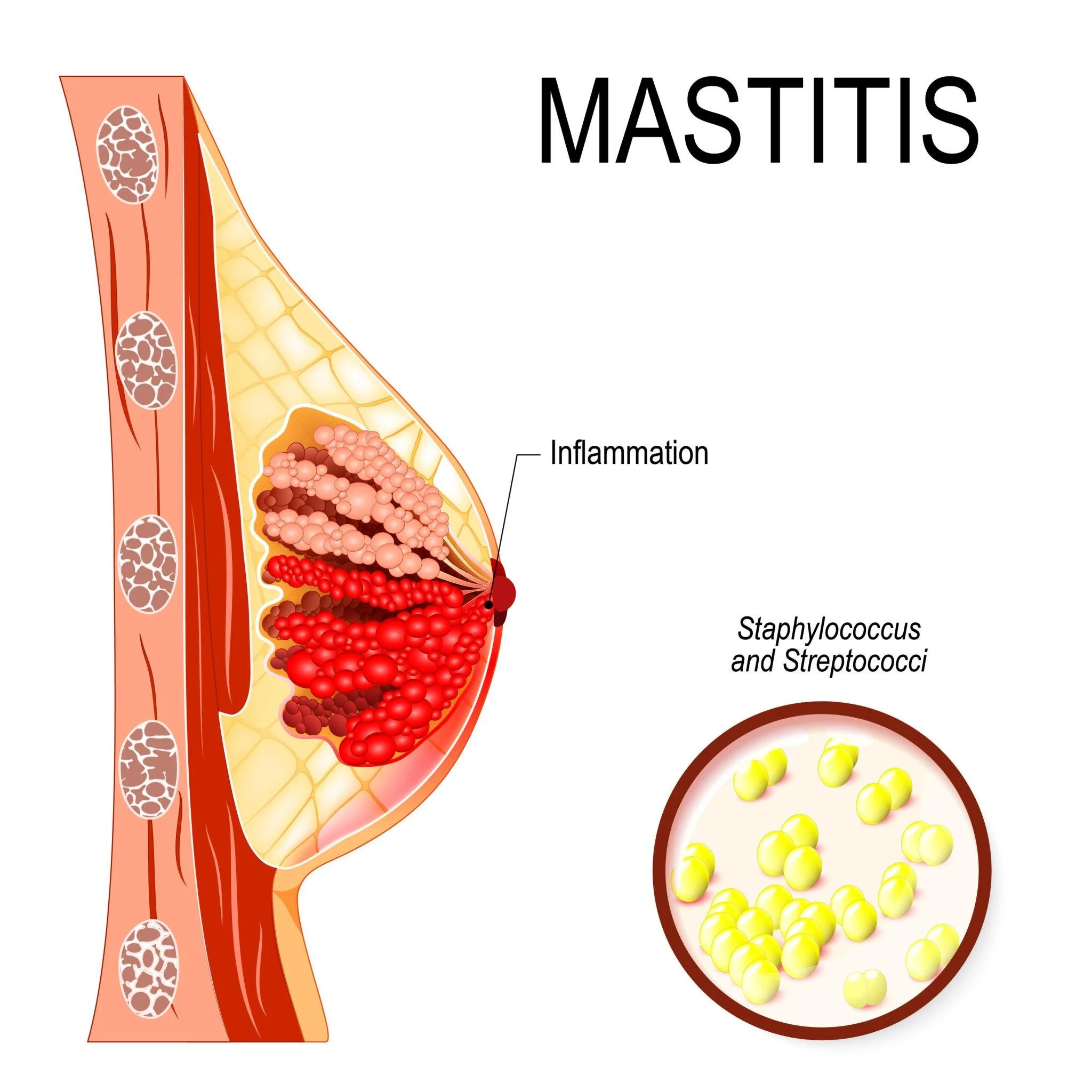
Mastitis is an inflammatory condition of the breast that can occur during breastfeeding. It often causes pain, swelling, redness, and flu-like symptoms.
According to the Academy of Breastfeeding Medicine, mastitis is part of a continuum of breast inflammation, which includes:
Engorgement
Clogged ducts (localized inflammation)
Inflammatory mastitis
Bacterial mastitis
This means mastitis is not always an infection—it often begins as inflammation that may or may not become bacterial.
What Causes Mastitis?
1. Milk Stasis (Primary Trigger)
Infrequent feeding or pumping
Sudden schedule changes
Oversupply
Incomplete milk removal
2. Inflammation and Tissue Swelling
Swelling compresses milk ducts, making flow more difficult and increasing pressure in the breast.
3. External Pressure
Tight bras
Baby carriers
Sleeping positions
4. Maternal Stress and Fatigue
Sleep deprivation
Physical exhaustion
Increased vulnerability to inflammation
5. Bacterial Overgrowth (In Some Cases)
Can develop when inflammation disrupts the breast’s normal microbiome
Not all mastitis requires antibiotics
Symptoms of Mastitis
Local Breast Symptoms
Painful, swollen area of the breast
Redness (often wedge-shaped)
Warmth to the touch
Firmness or lump
Systemic Symptoms (Key Difference from Clogged Duct)
Fever (over 100.4°F / 38°C)
Chills
Body aches
Fatigue
These flu-like symptoms are a hallmark of mastitis.
How to Treat Mastitis (ABM Evidence-Based Approach)
Treatment focuses on reducing inflammation and supporting recovery, not aggressively forcing milk out.
1. Continue Breastfeeding (Gently)
Feed on demand
Do not over-pump
Avoid trying to “empty the breast completely”
2. Use Ice to Reduce Inflammation
Apply cold packs for 10–20 minutes
Helps decrease swelling and pain
3. Rest and Hydration
Prioritize sleep and recovery
Increase fluid intake
4. Anti-Inflammatory Support
Ibuprofen can help reduce pain and swelling (if appropriate)
5. Gentle Lymphatic Drainage
Light, superficial touch
Move fluid away from the nipple
Avoid deep or aggressive massage
6. Antibiotics (When Necessary)
Only indicated if symptoms persist or bacterial infection is suspected
Not all mastitis requires antibiotics
👉 A healthcare provider can determine if antibiotics are needed.
What NOT to Do
Avoid outdated advice that may worsen mastitis:
❌ Deep, painful breast massage
❌ Excessive pumping
❌ Applying heat excessively
❌ Trying to “push through the pain”
These approaches can increase inflammation and delay recovery.
When to Seek Medical Care
Contact a healthcare provider if:
Fever persists beyond 24 hours
Symptoms worsen quickly
Severe pain or spreading redness develops
No improvement within 24–48 hours
How We Help at BoobEaze
If you’re experiencing mastitis symptoms, early intervention can make a significant difference.
At BoobEaze, we focus on:
Reducing inflammation through gentle techniques
Supporting lymphatic flow
Relieving tissue tension with myofascial release
Helping you continue breastfeeding comfortably
👉 Book an in-home session:
https://boobeazetherapy.com/contact
👉 Explore our services:
https://boobeazetherapy.com/services
Frequently Asked Questions
Is mastitis always an infection?
No. Mastitis often begins as inflammation and may or may not become bacterial.
Can I keep breastfeeding with mastitis?
Yes. Continuing to breastfeed is generally recommended and safe.
How long does mastitis last?
With proper treatment, symptoms often improve within 24–48 hours.
Credit & Medical Reference
This article is based on clinical guidance from the:
Academy of Breastfeeding Medicine
Their protocols emphasize that mastitis exists on a spectrum of breast inflammation and should be treated with a focus on reducing inflammation, supporting normal physiology, and avoiding overly aggressive interventions.